
Flexitank Insight
Why the 20ft Container Became the Standard Platform for Flexitank Bulk Liquid Transportation
How standard 20ft shipping containers, flexitank engineering, multimodal transport, and proper operational control work together to make modern bulk liquid logistics safer, more efficient, and globally scalable.
The 20ft shipping container has become one of the most important platforms in modern bulk liquid logistics. When combined with a properly engineered flexitank system, a standard 20ft container can be transformed into a high-capacity transport unit for many types of non-hazardous bulk liquids, including food-grade liquids, industrial oils, lubricants, and selected chemical cargoes. This system allows shippers to use the global container network without relying only on drums, intermediate bulk containers, or dedicated tank equipment.
The Power of the 20ft Container in Global Logistics
The 20ft container is not merely a metal box. It is a globally recognized logistics platform. Ports, rail terminals, trucks, warehouses, depots, freight forwarders, and shipping lines are all built around standardized container handling. This is why the 20ft container has become so valuable for flexitank transportation.
A flexitank allows a standard 20ft container to carry bulk liquid cargo without permanently converting the container into a tank. The container provides the structural frame, while the flexitank provides the liquid containment system. Together, they create a practical bridge between conventional container logistics and bulk liquid transport.
This combination is especially useful for companies that need flexible access to international routes. Instead of arranging returnable tanks or managing thousands of drums, shippers can move bulk liquid through established container networks. This supports road, rail, and sea transport within one integrated logistics chain.
| Logistics Element | Role in 20ft Flexitank Transport | Operational Benefit |
|---|---|---|
| 20ft Container | Provides the structural transport platform | Compatible with global road, rail, port, and sea networks |
| Flexitank | Holds the bulk liquid cargo inside the container | Enables high-volume liquid transport without drums |
| Container Liner and Protection | Helps protect the flexitank from container surfaces | Reduces abrasion and puncture risk |
| Valve and Hose System | Controls cargo loading and discharge | Improves operational flow and unloading control |
| Technical Support | Guides container selection, installation, loading, and discharge | Improves reliability and reduces handling mistakes |
Why Flexitanks Are Usually Installed in 20ft Containers
The 20ft container is widely used for flexitank transportation because it provides a balanced combination of internal space, structural strength, handling compatibility, and global availability. A fully loaded flexitank contains a large mass of liquid, and liquid cargo behaves differently from solid cargo. It moves, shifts, presses, and responds dynamically to transport conditions.
Because of this, the container must provide enough structural support to handle the internal cargo movement during road transport, rail movement, port handling, and sea transportation. The 20ft container offers a practical size for concentrating the cargo within a manageable transport unit while remaining compatible with international shipping infrastructure.
In many logistics routes, using a 20ft flexitank container can reduce dependence on drums or smaller packaging units. This may reduce handling work, loading complexity, warehouse pressure, and packaging waste. It also helps shippers move bulk quantities through a standardized container format.
Core Point
A 20ft flexitank container is not simply a container with a bag inside. It is a coordinated logistics system involving container condition, flexitank design, protective lining, valve control, loading discipline, transport route awareness, and discharge planning.
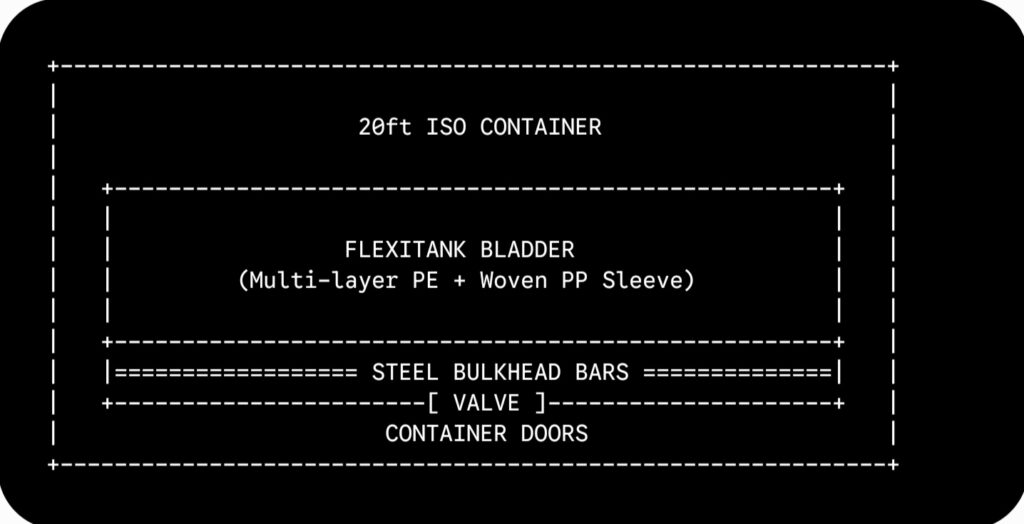
The Engineering Challenge of Liquid Cargo Inside a Container
Liquid cargo is dynamic. Unlike cartons, pallets, or dry packaged goods, bulk liquid does not remain fixed in one position during transport. It responds to acceleration, braking, vibration, turning, rail impact, and sea movement. This creates changing pressure inside the flexitank and against the container structure.
This is why flexitank engineering must consider more than volume. The flexitank must be designed to manage movement, pressure distribution, sealing strength, material endurance, and discharge behavior. The container must also be inspected and prepared so that the flexitank rests within a suitable transport environment.
If the container floor is damaged, the internal wall has sharp edges, the door structure is weak, or the installation is not properly completed, the risk profile changes. The flexitank and container must work together. A strong flexitank still requires a suitable container.
In professional bulk liquid logistics, container preparation is therefore not an optional step. It is part of transport safety.
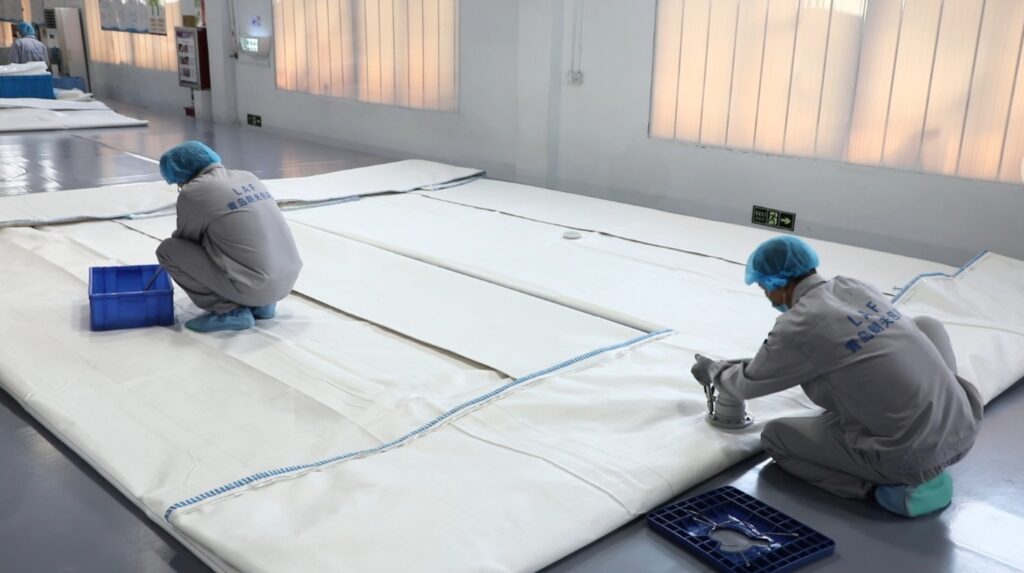
Container Selection: The First Step in Flexitank Reliability
Before a flexitank is installed, the 20ft container must be checked carefully. The container is the external frame of the transport system. If the container is unsuitable, the entire shipment may face unnecessary risk.
Container selection normally focuses on structural and cleanliness conditions. The internal floor should be strong, clean, and free from serious defects. The side walls should not contain sharp protrusions that can damage the flexitank. The container doors should close securely and provide sufficient stability during movement. Any interior surface that may contact the flexitank should be properly protected.
This preparation is especially important because bulk liquid cargo places continuous pressure on the flexitank during transport. Even a small protrusion or damaged surface may become a stress point when the cargo moves under vibration or impact.
| Container Check | Why It Matters |
|---|---|
| Floor condition | The floor supports the flexitank and cargo weight throughout transport. |
| Wall condition | Internal wall defects may create abrasion or puncture risks. |
| Door structure | The door end must remain stable under cargo movement and operational handling. |
| Cleanliness | Clean interiors help reduce contamination risk, especially for food-grade cargoes. |
| Surface protection | Proper lining and protection help isolate the flexitank from rough container surfaces. |
Loading a 20ft Flexitank Container
Loading is one of the most critical stages in the flexitank transport process. The cargo must be transferred into the flexitank under controlled conditions. The loading process affects how the liquid settles inside the container, how pressure develops, and how the flexitank performs during transport.
Proper loading is especially important because the flexitank changes shape as it fills. The liquid mass expands outward and settles into the container interior. If loading is not properly controlled, the system may experience uneven distribution or operational stress.
Loading supervision helps ensure that procedures are followed correctly. This may include checking the container, confirming the flexitank is properly positioned, monitoring the valve connection, observing the filling process, and ensuring that the cargo is handled according to the intended product application.
For food-grade liquids, loading discipline also helps protect hygiene and cargo quality. For industrial liquids, it helps maintain operational safety and reduce the risk of cargo loss.
Operational Perspective
In a 20ft flexitank container, loading is not just a filling process. It is the stage where cargo weight, pressure distribution, container condition, and transport stability begin to interact.
Multimodal Transport: Road, Rail, and Sea
A major advantage of the 20ft flexitank container system is multimodal compatibility. Once the cargo is loaded and sealed, the container can move through truck, rail, port, and vessel networks without repeatedly transferring the liquid into different packaging.
This reduces cargo handling and supports a more streamlined logistics process. However, it also means the flexitank must withstand different types of movement across each transport mode.
Road transport may involve turning, braking, uneven surfaces, and vibration. Rail transport may involve long-distance vibration and impact forces. Sea transport may involve rolling motion, humidity, container stacking, and long transit duration. A properly engineered flexitank system must be compatible with these combined conditions.
This is why scenario-based engineering is important. A shipment that travels only by road over a short distance does not face the same risk profile as a shipment that moves by road, rail, and sea across thousands of kilometers.
| Transport Mode | Main Stress on 20ft Flexitank Container | Engineering Focus |
|---|---|---|
| Road | Braking, turning, vibration, uneven surface movement | Fatigue resistance and installation stability |
| Rail | Repeated impact, long-distance vibration, acceleration changes | Dynamic pressure control and structural reliability |
| Sea | Rolling motion, long transit duration, humidity exposure | Sealing integrity and long-duration endurance |
| Port Handling | Container lifting, stacking, terminal movement | Container suitability and cargo stability |
Suitable Cargoes for 20ft Flexitank Containers
20ft flexitank containers are commonly used for many types of non-hazardous bulk liquid cargoes. These may include food-grade liquids, industrial oils, lubricants, and selected non-hazardous chemical products. The exact suitability always depends on cargo characteristics, regulatory requirements, route conditions, customer requirements, and technical compatibility.
Food cargoes require hygiene, contamination control, and suitable material compliance. Industrial oils require attention to compatibility, viscosity, loading conditions, and discharge behavior. Some non-hazardous chemicals may require specific material evaluation before shipment.
The key point is that a flexitank should not be treated as a universal container for every liquid. The cargo must be matched to the correct flexitank design, container condition, and transport scenario.
Important Practical Note
Flexitanks are generally intended for suitable non-hazardous bulk liquid cargoes. Cargo compatibility should always be confirmed before shipment, especially for chemical or temperature-sensitive products.
Why 20ft Flexitank Containers Can Improve Logistics Efficiency
A major reason companies use 20ft flexitank containers is efficiency. Instead of shipping liquid in many smaller containers, a flexitank can consolidate bulk cargo into one containerized shipment. This can reduce handling steps and simplify transport coordination.
Compared with drums, the flexitank approach may reduce the number of individual packaging units that need to be filled, sealed, loaded, unloaded, stored, counted, and managed. This can reduce labor intensity and improve operational flow.
A 20ft flexitank container can also support cleaner logistics planning because it fits into normal container routes. This helps shippers access existing port and inland transport systems without requiring specialized tank container availability for every shipment.
Efficiency in this context is not only about transport cost. It also includes warehouse space, loading time, discharge control, cargo recovery, route flexibility, and operational predictability.
Discharging Cargo from a 20ft Flexitank Container
Discharge is the final operational stage, but it should be planned from the beginning. A successful shipment is not complete when the container arrives. It is complete when the cargo is discharged safely, efficiently, and with minimum residue or handling difficulty.
The valve and hose system plays an important role in discharge control. Cargo viscosity, temperature, receiving equipment, pump arrangement, valve handling, and operator discipline all influence unloading performance.
Low-viscosity liquids may discharge more easily, while thicker liquids may require additional planning. Temperature-sensitive cargo may need suitable handling procedures to preserve flow behavior. The receiving facility must also be prepared to connect and manage the discharge process properly.
This is why destination support can be valuable. Technical guidance during unloading helps reduce operational mistakes and supports smoother cargo transfer.
Sustainability Benefits of Containerized Bulk Liquid Transport
The 20ft flexitank container system can also support sustainability goals by reducing dependence on rigid packaging systems for suitable cargoes. When liquid cargo is shipped in drums or other smaller units, the supply chain may involve more packaging material, more handling, more cleaning, and more waste management.
Containerized flexitank transport can reduce unnecessary handling and improve cargo movement efficiency. It may also reduce empty return complexity because the standard container continues within the normal container logistics network after use.
Sustainability in industrial logistics is often connected to efficiency. Fewer handling steps, better container utilization, reduced packaging waste, and improved multimodal transport planning can all contribute to a more responsible logistics system.
The Future of 20ft Flexitank Container Logistics
As global industries continue to demand safer, faster, and more sustainable bulk logistics solutions, the 20ft flexitank container system will remain important. It combines the universal availability of standard containers with the efficiency of bulk liquid transport.
Future development will likely focus on better materials, improved valve systems, more precise cargo compatibility evaluation, stronger technical support, better discharge control, digital tracking, and more scenario-based engineering for different transport routes.
The most successful systems will not be those that treat the flexitank as a simple bag. They will be those that treat the 20ft flexitank container as an integrated logistics platform involving product design, container preparation, loading discipline, transport engineering, and destination support.
20ft Flexitank Containers as a Modern Logistics Platform
The 20ft flexitank container has become a powerful solution because it combines standardized container infrastructure with engineered bulk liquid packaging. When properly selected, prepared, loaded, transported, and discharged, it can support efficient movement of suitable non-hazardous bulk liquids across road, rail, sea, and port networks. Its strength lies not only in cargo capacity, but in its ability to integrate with the global logistics system.