Innovation Insight
Why Product Life Cycle Management Is Becoming the Hidden Driver of Flexitank Innovation
How modern flexitank development extends far beyond manufacturing by integrating research, testing, operational feedback, technical support, and continuous improvement throughout the entire product life cycle.
In many industries, innovation is often viewed as the creation of a new product. Once the product is launched, attention shifts to production and sales. Modern flexitank engineering operates differently. The most successful product systems are not static products released once and left unchanged. Instead, they evolve continuously through a process known as Product Life Cycle Management, where every stage of a product’s existence contributes to future improvement.
What Is Product Life Cycle Management?
Product Life Cycle Management, often referred to as PLM, is the process of managing a product from its earliest concept stage through design, engineering, testing, manufacturing, field deployment, customer usage, operational support, and eventual improvement or replacement.
Rather than viewing a flexitank as a finished item once production is completed, PLM treats the product as part of a continuous development journey.
Every shipment, every installation, every loading operation, every discharge process, and every customer interaction becomes a potential source of engineering knowledge.
This approach transforms product development from a linear process into a continuous improvement cycle.
| Traditional Product Thinking | Product Life Cycle Management |
|---|---|
| Design → Manufacture → Sell | Design → Test → Deploy → Monitor → Improve |
| Limited post-sale involvement | Continuous post-deployment feedback |
| Product viewed as finished | Product viewed as continuously evolving |
Why Flexitank Systems Benefit From Life Cycle Thinking
Flexitanks operate in highly dynamic logistics environments. They are exposed to road transport, rail systems, ocean freight, ports, warehouses, loading terminals, unloading facilities, and a wide range of environmental conditions.
No laboratory can perfectly recreate every real-world transport scenario.
As a result, valuable engineering information continues emerging long after the product leaves the manufacturing facility.
A flexitank transporting edible oil through tropical ports may encounter different operational challenges than one transporting industrial lubricants through long railway corridors. Both experiences contribute valuable data for future development.
PLM allows engineering teams to capture these lessons systematically rather than losing them after the shipment is completed.
Key Principle
The logistics journey itself becomes part of the research and development process.
The Role of Testing Throughout the Product Life Cycle
Testing is often associated with product development before launch. However, within a PLM framework, testing continues throughout the product’s operational life.
Engineering teams continually evaluate performance data, transport behavior, material durability, valve reliability, loading procedures, discharge efficiency, and operational outcomes.
This allows companies to identify trends before they become significant issues.
Instead of reacting only after problems occur, PLM encourages proactive improvement based on continuous observation and analysis.
Testing therefore evolves from a one-time activity into a permanent engineering discipline.
Why Technical Support Is Part of Product Development
Many people view technical support as a customer service function. Within Product Life Cycle Management, technical support serves a much broader purpose.
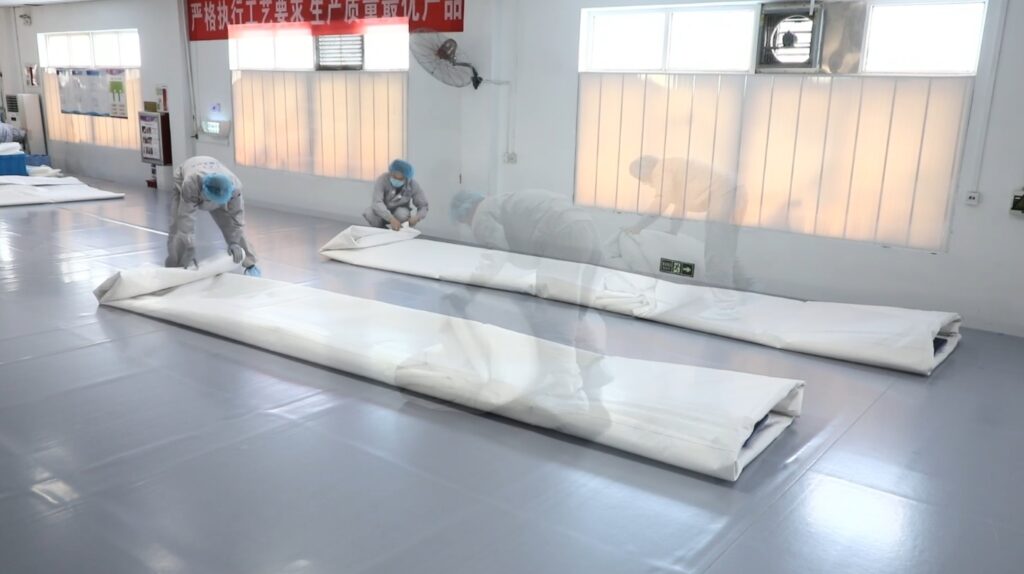
Field support teams observe how products behave under actual operating conditions. They witness installation practices, loading methods, discharge operations, environmental influences, and transport realities that are difficult to reproduce in controlled testing environments.
This information becomes highly valuable for future engineering decisions.
Support teams effectively act as a bridge between real-world operations and research and development.
Operational Insight
Every customer interaction, loading operation, and transport experience contains information that can improve future product performance.
How Digital Technology Supports PLM
Modern Product Life Cycle Management increasingly depends on digital technologies.
Engineering data, testing results, operational feedback, material performance information, transport observations, and quality records can all be integrated into centralized systems.
This creates a continuous flow of information between different departments.
Research teams gain access to operational insights. Manufacturing teams receive updated engineering guidance. Quality teams identify recurring patterns. Technical support teams contribute field observations.
Digital integration helps transform isolated information into actionable knowledge.
| PLM Component | Contribution to Innovation |
|---|---|
| Research & Development | Creates new engineering solutions |
| Testing | Validates performance assumptions |
| Technical Support | Provides operational feedback |
| Digital Systems | Connects information across departments |
| Quality Management | Monitors consistency and reliability |
The Future of Flexitank Innovation
As global logistics networks continue evolving, Product Life Cycle Management will become increasingly important.
Future flexitank systems will likely be shaped not only by stronger materials or larger capacities, but also by how effectively companies capture, analyze, and apply operational knowledge.
The organizations that learn fastest from real-world logistics experience may gain the greatest long-term competitive advantage.
Innovation will increasingly depend on continuous improvement rather than isolated breakthroughs.
Innovation Never Truly Ends
In modern flexitank engineering, a product’s launch is not the end of development. It is the beginning of a continuous learning process. Through Product Life Cycle Management, every shipment, every transport route, every customer interaction, and every operational observation becomes an opportunity to improve future performance. This continuous cycle of learning and refinement is increasingly becoming one of the most powerful drivers of innovation in bulk liquid logistics.