
Engineering Insight
Why Flexitank Failure Prevention Begins Long Before Cargo Loading
Understanding how container preparation, engineering standards, transport conditions, loading procedures, and operational discipline influence bulk liquid transport safety.
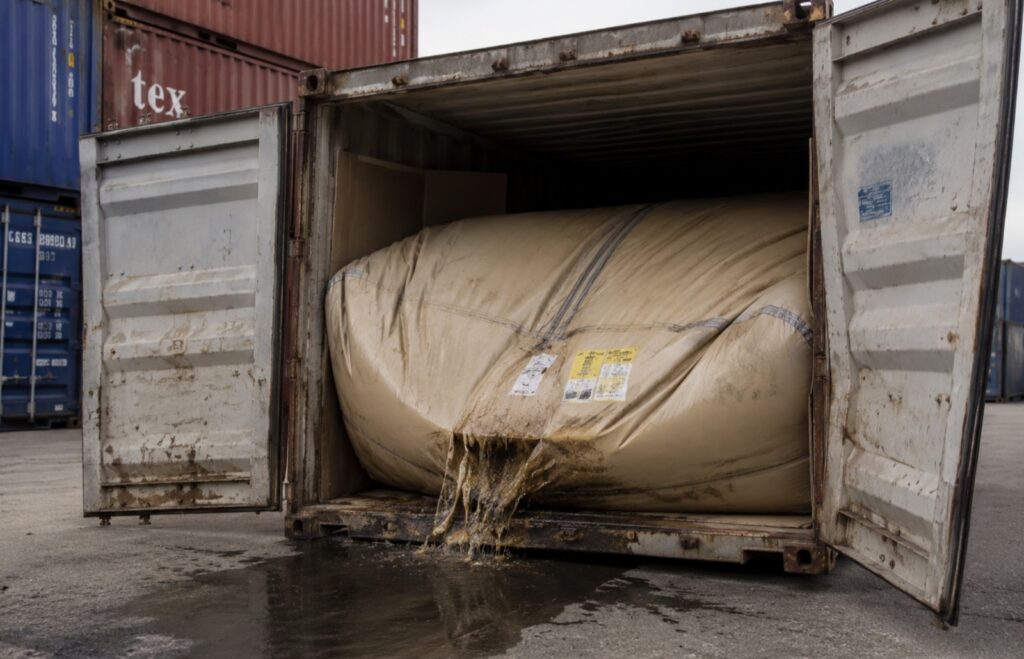
In bulk liquid logistics, many people assume that cargo safety depends mainly on the strength of the flexitank itself. In reality, successful flexitank transportation depends on a much broader operational system. Container condition, installation procedures, loading practices, cargo compatibility, transport environment, route planning, and unloading preparation all contribute to overall performance. In many cases, the conditions that eventually lead to cargo incidents begin long before the liquid is even loaded into the container.
The Misunderstanding Around Flexitank Safety
One of the most common misunderstandings in bulk liquid logistics is the belief that flexitank safety is determined solely by material thickness or bag strength. While material quality is important, a flexitank operates as part of a complete logistics system rather than as an isolated product.
A well-designed flexitank can still face operational problems if the container is damaged, the loading method is incorrect, the cargo is unsuitable, the route conditions are extreme, or unloading procedures are poorly managed.
Modern flexitank logistics therefore requires a systems-based approach to risk management. Safety depends not only on product engineering, but also on process discipline throughout the transport chain.
This is one reason why technical support, service networks, scenario-based engineering, and operational guidance have become increasingly important within modern bulk liquid transportation.
Core Principle
Flexitank reliability is not created at one single stage. It is built progressively through engineering, preparation, loading, transportation, operational handling, and unloading coordination.
Why Container Preparation Matters
The shipping container itself forms the structural environment within which the flexitank operates. Even a high-quality flexitank depends heavily on container condition because the container walls, flooring, and internal structure help manage cargo force distribution during transportation.
Damaged flooring, protruding surfaces, rusted areas, sharp edges, structural deformation, or weakened door structures can all increase operational risk during transport.
During loading and transportation, bulk liquid cargo continuously exerts pressure against the flexitank and surrounding container structure. Any abnormal surface or structural weakness inside the container can become a localized stress point.
This is why container inspection and preparation are considered critical operational steps within professional flexitank logistics systems.
Container preparation often includes:
- Floor condition inspection
- Wall integrity verification
- Door frame examination
- Removal of protruding objects
- Surface cleanliness checks
- Structural stability assessment
- Compatibility evaluation for cargo type
Proper preparation reduces the likelihood of stress concentration and improves operational stability during transportation.
| Container Issue | Potential Operational Risk | Why Inspection Matters |
|---|---|---|
| Damaged flooring | Uneven force distribution | Reduces puncture and stress risk |
| Sharp edges | Material abrasion or damage | Protects structural integrity |
| Weak door structure | Cargo pressure instability | Maintains transport safety |
| Contamination residue | Cargo quality compromise | Supports food-grade standards |
Loading Procedures Influence Structural Stability
Loading procedures directly affect how the liquid cargo behaves inside the flexitank during transportation. Improper loading can create uneven liquid distribution, abnormal pressure concentration, or excessive movement during transit.
Bulk liquid cargo behaves dynamically rather than statically. During transport, the liquid continuously shifts position based on acceleration, braking, turning, railway movement, and maritime motion. If the initial loading condition is poorly balanced, these movement forces may become amplified during transportation.
Professional loading procedures therefore focus on maintaining balanced filling conditions and controlling operational stress during cargo transfer.
Loading supervision also plays an important role. Technical teams often monitor loading operations to verify that procedures align with product requirements, cargo compatibility standards, and transport safety guidelines.
In many logistics systems, operational discipline during loading contributes just as much to transport reliability as the product design itself.
Operational Perspective
In flexitank logistics, cargo loading is not simply a transfer operation. It is the beginning of the transport stability process.
Transport Conditions Continue Affecting Cargo Stability
Once transportation begins, the cargo environment becomes highly dynamic. The flexitank system must absorb movement forces generated across road, rail, and maritime transport stages.
Long-distance transportation introduces repeated vibration cycles, movement stress, environmental exposure, and operational transitions. Each transport mode affects cargo behavior differently.
Road transport may create sharp directional force changes due to braking, acceleration, or turning. Railway systems introduce repeated vibration and impact movement over long distances. Maritime shipping adds rolling motion and extended environmental exposure.
Because of these conditions, flexitank engineering increasingly focuses on:
- Fatigue resistance
- Structural force distribution
- Material endurance
- Seal reliability
- Dynamic pressure management
- Container interaction stability
- Transport scenario compatibility
The objective is not simply to survive isolated force events, but to maintain stable performance throughout the entire logistics cycle.
Why Cargo Type Changes Engineering Requirements
Different cargoes create very different engineering requirements within flexitank systems. Food-grade liquids, industrial oils, chemicals, lubricants, wine, and high-temperature products each behave differently during loading, transportation, and unloading.
Some cargoes require oxygen resistance or moisture protection. Others require high-temperature compatibility, chemical resistance, or enhanced structural stability.
Food-grade cargo introduces additional hygiene and contamination control expectations. High-temperature cargo requires material stability and sealing performance under elevated thermal conditions.
This is why scenario-based engineering has become increasingly important within modern bulk liquid logistics. Packaging systems must be matched carefully to actual cargo conditions rather than treated as universal solutions.
| Cargo Type | Operational Requirement | Engineering Focus |
|---|---|---|
| Food-grade liquids | Contamination prevention | Hygiene and barrier protection |
| Industrial oils | Long-distance stability | Structural endurance |
| High-temperature cargo | Thermal resistance | Heat sealing toughness |
| Chemicals | Material compatibility | Chemical resistance |
The Importance of Technical Support Networks
Modern flexitank logistics increasingly depends on technical support systems that extend beyond manufacturing itself. Operational guidance during installation, loading, transportation, and unloading helps reduce human error and improve transport consistency.
Technical support also creates an important feedback mechanism for product improvement. Field teams observe how products behave under actual logistics conditions, identify recurring operational challenges, and communicate these findings back into engineering development.
This continuous improvement cycle helps packaging systems evolve according to real transport scenarios rather than theoretical assumptions alone.
In this sense, technical support becomes part of the engineering ecosystem rather than merely a post-sales function.
Field Reality
Many logistics improvements do not originate only inside laboratories. They emerge from operational experience observed during actual transportation and cargo handling conditions.
Why Prevention Is More Valuable Than Response
In bulk liquid logistics, prevention is significantly more valuable than reactive correction. Once a transport incident occurs, the operational consequences can extend far beyond the packaging itself.
Cargo loss, environmental treatment, operational delays, container damage, customer claims, cleaning requirements, supply chain disruption, and reputational impact can all emerge from failures that originated much earlier in the logistics process.
This is why professional flexitank systems increasingly emphasize:
- Scenario-based engineering
- Container inspection
- Loading supervision
- Operational training
- Technical guidance
- Product compatibility evaluation
- Transport condition analysis
These preventive measures help reduce uncertainty before transportation begins.
In many cases, the most important logistics decisions are made before the cargo even enters the container.
The Future of Risk Management in Bulk Liquid Logistics
As global supply chains become more complex, risk management within bulk liquid logistics will likely become increasingly data-driven and scenario-focused. Companies are placing greater emphasis on operational consistency, route analysis, packaging reliability, and logistics visibility.
Packaging systems will continue evolving beyond traditional containment functions. Future flexitank engineering will likely integrate advanced materials research, structural simulation, operational analytics, digital monitoring, and transport modeling into broader logistics management systems.
The objective will not only be stronger packaging, but smarter transportation systems capable of adapting to increasingly diverse operational environments.
In this environment, companies that view logistics packaging as part of an integrated transport engineering system will likely be better positioned to manage operational complexity across global supply chains.
Building Reliability Before Transportation Begins
Successful flexitank transportation is not created by one single product feature. It emerges from coordinated engineering, proper container preparation, disciplined loading procedures, transport-aware design, operational support, and continuous technical improvement. In modern bulk liquid logistics, the most effective safety strategy is often not reactive response, but systematic prevention built into the transport process from the very beginning.